Surgery recovery can raise a lot of questions—especially if you already use peptides, GLP-1 medications, supplements, hormones, or other wellness products.
You may be wondering:
- Should I stop peptides before surgery?
- Can I take BPC-157 after surgery?
- Can TB-500 help with recovery?
- Should I tell my anesthesiologist about semaglutide or tirzepatide?
- When is it safe to restart a peptide?
Online answers often make these questions sound simple.
They are not.
Do not start, stop, restart, inject, or combine a peptide around surgery based on an online protocol.
Your surgeon and anesthesia team need to know about every prescription medication, compounded product, peptide, supplement, hormone, injection, GLP-1 medication, and research product you use.
Their instructions take priority over any wellness plan or peptide protocol.
Peptides such as BPC-157 and TB-500 are not FDA-approved treatments for surgical recovery, wound healing, tendon repair, ligament healing, or postoperative rehabilitation. Human evidence remains limited, particularly for people recovering from surgery. FDA's 2026 review materials also state that neither BPC-157-related nor TB-500-related bulk substances are components of FDA-approved drugs.
Quick answer: There is no universal peptide protocol for surgery recovery. Before surgery, disclose everything you take to your surgeon and anesthesiologist. After surgery, follow the surgical team's wound-care, medication, rehabilitation, nutrition, and activity instructions. Do not start or restart a peptide unless the surgical team and the clinician responsible for prescribing it agree that it is appropriate.
If you are still trying to understand the difference between a prescription product and a research vial, read Is Peptide Therapy Safe? Sourcing, Purity, and Why Medical Supervision Matters first.
Medically reviewed by: Megan Nickerson, DNP · Last medically reviewed: September 2026
Medical disclaimer: This article is for educational purposes and does not replace medical advice, diagnosis, surgical clearance, or anesthesia guidance. Eligibility, product availability, dosing, and monitoring must be determined by licensed healthcare professionals responsible for your care.
Why Surgery Changes the Conversation
Outside the surgical setting, people often talk about wellness in terms such as recovery, optimization, performance, body composition, or longevity.
Around an operation, the priorities are different.
The main priority is perioperative safety.
Surgery can involve anesthesia or sedation, bleeding, infection risk, wound healing, pain medication, antibiotics, blood-clot prevention, changes in eating and drinking, altered medication schedules, activity restrictions, rehabilitation, and postoperative monitoring.
Adding an unapproved peptide, supplement, injection, or other wellness product during this period can make an already complex clinical picture harder to interpret.
For example, if new nausea, dizziness, swelling, abdominal symptoms, low blood pressure, an allergic reaction, or another unexpected symptom develops after surgery, the surgical team needs to know everything you have taken.
The most important principle is therefore simple:
Your surgeon's and anesthesia team's instructions take priority over any wellness plan, peptide recommendation, or online recovery protocol.
Before Surgery: Tell Your Surgical Team Everything You Take
Do not assume a product is irrelevant because you consider it “natural,” “wellness,” “compounded,” or “just a peptide.”
Your surgical team needs the complete picture.
Before your procedure, disclose:
- Prescription medicines, over-the-counter medicines, supplements, vitamins, herbal products, peptides, hormones, GLP-1 medications such as semaglutide or tirzepatide, NAD+ products, testosterone or other hormone therapy, weight-management drugs, pain medicines, sleep medicines, blood thinners, cannabis, nicotine, alcohol use, recreational substances, online products, and anything labeled “research use only.”
If you have the original medication or pharmacy label, bring it. A photo of the package can also help when the exact ingredient, concentration, brand, or pharmacy is unclear.
Do not hide use of an online or research product because you are worried that your surgeon will disapprove.
Accurate information helps the team make safer decisions.
Should You Stop Peptides Before Surgery?
There is no single answer that applies to every peptide, every patient, or every operation.
Do not decide this yourself.
Whether a product should be paused may depend on:
| Factor | Why It Matters |
|---|---|
| Exact product | Different products have different evidence and pharmacology |
| Why you take it | The reason for treatment affects the risk-benefit discussion |
| Route | Oral, injectable, nasal, topical, and other routes are not interchangeable |
| Type of operation | Different procedures have different risks |
| Anesthesia plan | General anesthesia, deep sedation, and local anesthesia differ |
| Other medications | Interactions and overlapping effects may matter |
| Medical history | Kidney, liver, cardiovascular, metabolic, and other conditions can affect planning |
| Current symptoms | Nausea, vomiting, pain, infection, or other symptoms may change the plan |
| Surgeon instructions | The surgical team is responsible for perioperative care |
There is no evidence-based universal rule such as “stop all peptides two weeks before surgery” or “restart when the incision closes.”
Likewise, an online recommendation to continue BPC-157 until surgery, stop TB-500 for a specific number of days, or inject away from the surgical site should not replace individualized medical guidance.
GLP-1 Medications and Anesthesia
Semaglutide and tirzepatide deserve their own discussion because they can affect gastric emptying.
That matters around anesthesia because retained stomach contents can increase the risk of regurgitation and aspiration during general anesthesia or deep sedation.
Current guidance has evolved considerably.
The American Society of Anesthesiologists' current patient guidance, reviewed in October 2025, states that many patients may continue GLP-1 medications before surgery, but the decision should be individualized with the anesthesiologist, surgeon, and prescribing clinician. Factors such as gastrointestinal symptoms, dose escalation, other conditions affecting gastric emptying, and the planned procedure can change the risk assessment.
That means neither of these blanket statements is appropriate:
- “Everyone must stop semaglutide before surgery.”
- “Everyone can continue tirzepatide before surgery.”
The surgical and anesthesia team may consider factors such as your exact medication, why you take it, when you last took it, whether you are early in treatment or changing doses, whether you have nausea or vomiting, diabetes status, the type of anesthesia planned, and your individual aspiration risk.
If you take Wegovy, Ozempic, Zepbound, Mounjaro, or another GLP-1-based medication, tell the anesthesia team well before the procedure.
Do not stop it—or deliberately continue it against surgical instructions—based on social media or an old article.
Surgery Day: Nothing New and Nothing Hidden
The day of surgery is not the time to test a new supplement, add a peptide, receive an unplanned wellness injection, or try an IV because someone online said it may help recovery.
Follow your surgical team's fasting and medication instructions exactly.
If you realize you forgot to disclose something, tell the anesthesia team before sedation or anesthesia begins.
A product that seems unimportant to you may still matter to them.
The goal on surgery day is not to “optimize” the process with additional products.
It is to make the procedure as predictable and safe as possible.
After Surgery: Why Your Surgeon Leads the Recovery Plan
After an operation, the surgeon or surgical team responsible for your procedure should lead your recovery plan.
That plan may address wound care, prescribed medications, antibiotics when appropriate, pain control, blood-clot prevention, mobility, physical therapy, nutrition, hydration, activity restrictions, and follow-up appointments.
A peptide, supplement, IV service, hormone, or wellness injection should not be added without the team's knowledge.
There is also no universal evidence-based restart date for peptides after surgery.
A responsible conversation about restarting or beginning any nonessential product needs to consider what operation you had, whether the wound is healing normally, which medications you are taking, whether complications have occurred, and what your surgeon has instructed you to avoid.
A prescription from another clinician also does not automatically mean the surgeon approves of using that medication around the operation.
Can Peptides Help With Surgery Recovery?
The current evidence does not support marketing BPC-157, TB-500, or similar wellness peptides as proven treatments for postoperative recovery.
That distinction matters because online discussions often move from:
“This molecule affected a healing pathway in an animal.”
to:
“Therefore it should help people heal after surgery.”
Those are not equivalent statements.
Human surgical recovery involves wound biology, anesthesia, medications, infection risk, rehabilitation, underlying health conditions, surgical technique, and many other variables.
Preclinical research may justify further study.
It does not create a postoperative treatment protocol.
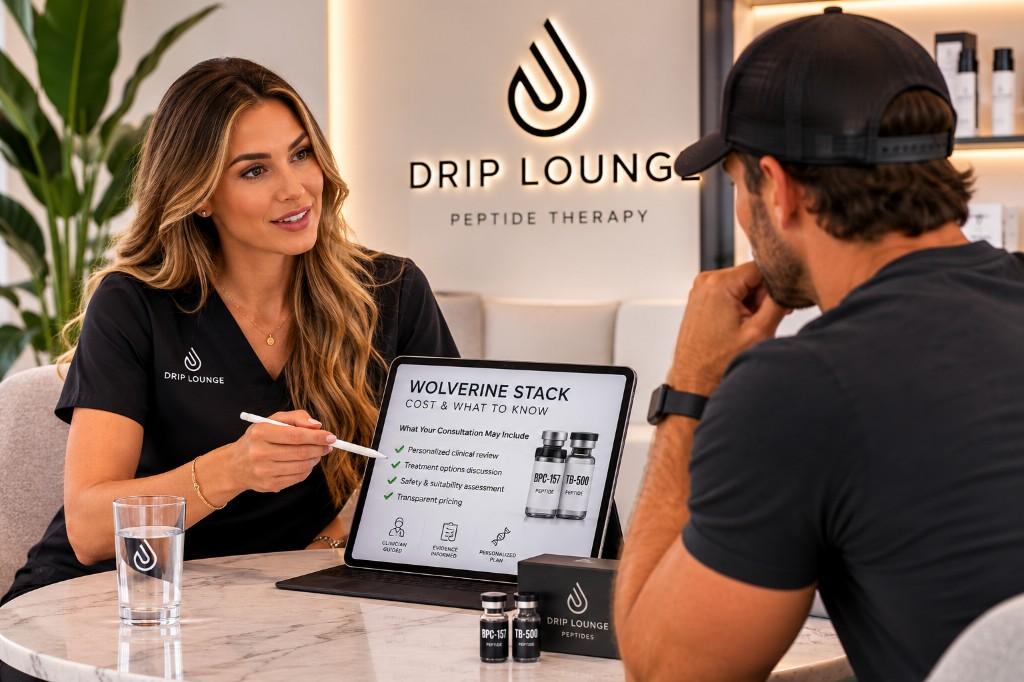
Some online recovery conversations also combine BPC-157 with TB-500 in stacks such as the Wolverine Stack for athletes. That combination has not been established as safe or effective for postoperative care in human trials.
BPC-157 After Surgery: What Does the Evidence Show?
BPC-157 has generated significant interest because preclinical studies have explored effects involving muscle, tendon, ligament, bone, gastrointestinal tissue, and other injury models.
A 2025 systematic review of BPC-157 in orthopedic sports medicine identified 36 included studies: 35 preclinical studies and only one clinical study. The human study was not a randomized postoperative trial; it involved a small group with chronic knee pain. The review concluded that human clinical data and human safety evidence remained very limited.
A separate 2025 pilot study administered intravenous BPC-157 to only two adults and reported no adverse effects during that very small experiment. A two-person safety pilot cannot establish effectiveness or general safety for surgical recovery.
Most importantly, there are not robust human trials showing that BPC-157:
| Claim Commonly Seen Online | What Current Evidence Supports |
|---|---|
| Speeds surgical wound healing | Not established in human surgical trials |
| Improves ACL recovery | Not established |
| Speeds tendon repair after surgery | Not established |
| Improves ligament healing | Not established |
| Improves bone healing after surgery | Not established |
| Prevents postoperative infection | Not established |
| Reduces scar formation | Not established |
| Shortens rehabilitation | Not established |
| Gets patients back to activity faster | Not established |
BPC-157 therefore should not be presented as a routine postoperative therapy.
FDA has also identified potential compounding concerns involving BPC-157, including limited safety information, immunogenicity concerns for some routes, and challenges involving peptide-related impurities and active pharmaceutical ingredient characterization.
For broader context on approval status and provider-guided care, see Is Peptide Therapy Safe? Sourcing, Purity, and Why Medical Supervision Matters. For a realistic timeline outside the surgical setting, read How Long Does BPC-157 Take to Work?
What About TB-500 After Surgery?
TB-500 is commonly discussed online in the same recovery conversations as BPC-157.
It is important not to confuse TB-500 with all research involving thymosin beta-4.
FDA identifies TB-500 as a fragment related to thymosin beta-4 and has specifically noted that it has not identified human exposure data for drug products containing that TB-500 fragment. FDA has also raised concerns involving possible immunogenicity, aggregation, and peptide-related impurities.
FDA's 2026 briefing materials additionally state that neither TB-500 free base nor TB-500 acetate has an applicable USP/NF drug-substance monograph and neither is a component of an FDA-approved drug.
Research involving full-length thymosin beta-4 in another formulation, route, or clinical context therefore should not be repackaged as proof that injectable TB-500 improves surgery recovery.
There is not sufficient human evidence to claim that TB-500 injections repair surgical tissue, accelerate wound healing, improve tendon or ligament recovery, reduce scarring, shorten rehabilitation, or are established as safe during the perioperative period.
Read more: Wolverine Stack Side Effects: BPC-157 + TB-500 Safety
BPC-157 and TB-500 Regulatory Status in 2026
The regulatory situation deserves careful wording because it is evolving.
In July 2026, FDA's Pharmacy Compounding Advisory Committee considered BPC-157-related and TB-500-related bulk drug substances for possible inclusion on the 503A Bulks List.
FDA staff had recommended against including the substances. The advisory committee subsequently voted narrowly to recommend inclusion of BPC-157 and TB-500.
That committee vote is advisory, not final FDA action. FDA explains that advisory-committee recommendations are nonbinding, and the agency's final regulatory determination is a separate process.
As of this article's September 2026 regulatory review:
- BPC-157 and TB-500 are not FDA-approved drugs for surgery recovery.
- Their compounding status should be checked against current FDA information immediately before prescribing, dispensing, or publishing definitive access claims.
For more background on the difference between compounded medicines and research products, read Are Compounded Peptides Safe? and Compounding Pharmacy Peptides vs Online Research Products.